
The Waifu Card Price Guide: How Value Actually Works
Updated July 1, 2026
The short answer
Waifu card prices are driven by six factors, in rough order of weight: artwork quality, character popularity, rarity, current market activity, collector demand depth, and set importance — the same inputs as our Waifu Score. To price any card: check recent sold listings (not asking prices), adjust for condition and printing, and discount for reprint risk. Signed SPs and first-set premium prints hold value best; hype-set chase cards are the most volatile.
Explore the Market & Value hub
The six drivers, and why order matters
Artwork and character popularity come first because they define the demand pool — how many people want this card at all. Rarity only multiplies a demand that already exists: a secret rare of a character nobody collects is just an awkward pull. Market value and demand depth describe the present; set importance describes whether the card sits in a product people will still talk about in five years.
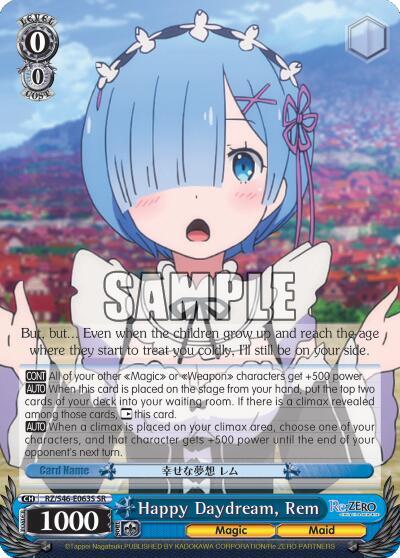
This ordering explains the market's apparent paradoxes: why an unplayable Rem SR outprices a meta staple, why the tenth Nami alt art still sells, and why some secret rares are cheaper than the SRs below them.

How to research a price in five minutes
Sold listings, not asking prices — filter eBay to completed sales and read the last ten. Note the printing (first edition vs unlimited, JP vs EN) and condition of each sale. Raw near-mint is the default market; graded copies are a separate market with their own curve. If sales are thin, widen the window and treat any single outlier sale as noise.
- Check sold listings, never asking prices
- Match printing and language exactly — reprints can differ 5× in value
- Raw and graded are different markets; don't average them
- Thin markets: trust the median of many sales over any single one
Reprint risk: the silent price killer
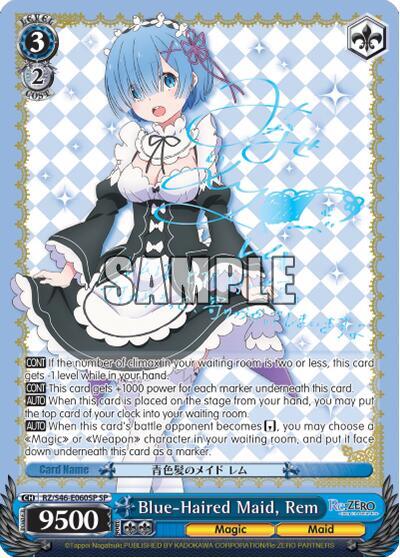
Publishers reprint what sells, and reprints crush singles prices — the Iono SAR's slide after Paldea Evolved's print waves is the textbook case. Structural protection matters: signed Weiss SPs are never reprinted, first-print runs are fixed forever, and anniversary products don't return. When you pay a premium, know what protects it.

What we track
Our market movers page surfaces the biggest 90-day price shifts in both directions, and the undervalued ranking flags premium prints still climbing off a low base. Prices across the site are editorial estimates for near-mint raw copies — live market integration is on the roadmap.
Frequently asked questions
- What makes a waifu card go up in value?
- New anime seasons, character story moments, set rotations off shelves, and grading lock-up of clean supply. The strongest sustained driver is simple: a beloved character whose premium prints stop being printed.
- Are waifu card prices manipulated?
- Thin markets can be moved by small groups, and hype cycles are real. Defenses: buy on sold-listing data, be suspicious of parabolic charts, and never chase a spike.
- How accurate are TCGWaifu's prices?
- They're editorial estimates for near-mint raw copies based on recent market activity — directionally reliable, not live quotes. Always verify against current sold listings before a large purchase.
Keep reading
Weekly Waifu Card Market Movers
One email a week: which waifu cards moved, which sets are about to drop, and where the quiet money is going. No spam, unsubscribe anytime.