
Is Grading Anime Cards Worth It?
Updated July 24, 2026
The short answer
Grade a card only when it clears three bars at once: it is worth several times the grading fee, your copy is genuinely close to flawless, and a slab adds something you actually want — authentication, sale liquidity, or protection for a long-term hold. For most modern anime cards worth less than several times that cost, raw in good storage is the better position; for signed SPs, manga rares, and clean vintage, grading is often the single best thing you can do for the card.
The math that decides it
Grading is a transaction with three costs — the service fee, insured shipping both ways, and months of waiting — set against one uncertain payoff: the premium a high grade adds. The working rule across this site is simple: the card should be worth several times the all-in grading cost before you submit, because the premium only materializes at the top grades and your copy might not get one.
Run the tiers honestly. On a $30 modern alt art, even a top grade often adds less than the fee — the market for slabbed copies is thin at that price. On a $400 secret rare, a top grade meaningfully widens your buyer pool and can pay for itself several times over. On a four-figure grail, grading approaches mandatory: buyers at that level expect authentication and condition certainty, and the slab is what lets the card trade sight-unseen.


When grading clearly makes sense
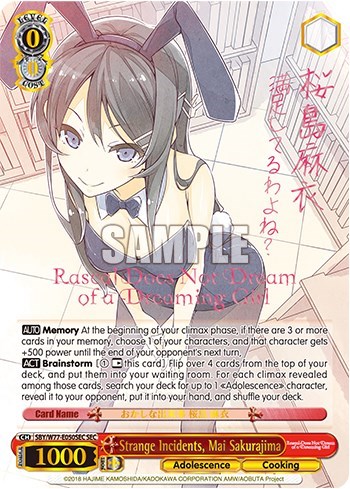
Signed and stamped cards first: a slab from a major service authenticates the signature treatment along with the card, which converts a trust problem into a lookup — this is why graded signed Weiss SPs trade so much more smoothly than raw ones. Authentication is also the strongest anti-counterfeit move for any chase card that fakes cluster around.
Vintage is the second clear case. Cards that have survived a decade of binders and moves — the Project DIVA era Mikus, early Weiss prints — are condition lotteries raw, and clean copies keep getting locked away in slabs, which is itself part of why clean vintage appreciates. If you hold a sharp copy of an out-of-print card, grading both proves and preserves the condition that makes it valuable.
Pokémon deserves its own note: it is the most grading-sensitive market we cover, with public population data and deep slab liquidity — a PSA 10 can multiply a trainer full art's value 3–5×. The same logic applies to the other games at lower intensity because their graded markets are younger and thinner.



When it burns money
The classic mistakes: grading cheap modern cards because they are pretty (the slab costs more than the premium), grading a card with a visible flaw and hoping (graders see everything, and mid grades on modern anime cards often add nothing over raw), and grading in-print cards whose supply is still growing (today's premium can be next year's reprint casualty).
There is also an opportunity cost collectors underweight: the same money spent on fees across several borderline submissions could have bought the next chase card outright. Grading is a tool for cards that have already earned it, not a way to make ordinary cards special.
How to actually do it
Pre-screen ruthlessly under strong light: centering, corners, edges, surface — front and back. Compare against what the card looked like fresh from the pack, not against other played copies. If you would not call it near-flawless yourself, the grader will not either.
Pick the service tier by the card's value and your patience — every major grader publishes current fees and turnaround estimates, and they change often enough that you should check the schedule the week you submit rather than trust old forum numbers. Ship in sleeves and semi-rigid holders, insured, and photograph everything before it leaves your hands.
Frequently asked questions
- What is the minimum card value worth grading?
- As a rule of thumb, several times your all-in grading cost — fee plus insured shipping both ways. Below that, even a top grade struggles to pay for itself; raw in proper storage is the better position.
- Should I grade signed Weiss Schwarz SPs?
- It is one of the strongest cases for grading anywhere in the hobby: the slab authenticates the signature treatment, which is exactly what buyers of these cards are paying for.
- Is a mid grade worth anything on anime cards?
- Often little over raw for modern cards — the premium concentrates in the top grades. This is why pre-screening condition honestly before you pay a fee matters more than picking the right service.
- Does grading protect against fakes?
- Yes — authentication by a major service is the strongest single check, though you should still verify the slab's certification number in the grader's lookup, since counterfeit slabs exist too.
Keep reading
Weekly Waifu Card Market Movers
One email a week: which waifu cards moved, which sets are about to drop, and where the quiet money is going. No spam, unsubscribe anytime.